Current condition
Identify the machine and exact guard/access point with overall and defect photographs. Record fixings, hinges, panels/mesh, alignment, visibility and relevant access devices against available drawings and manufacturer information.
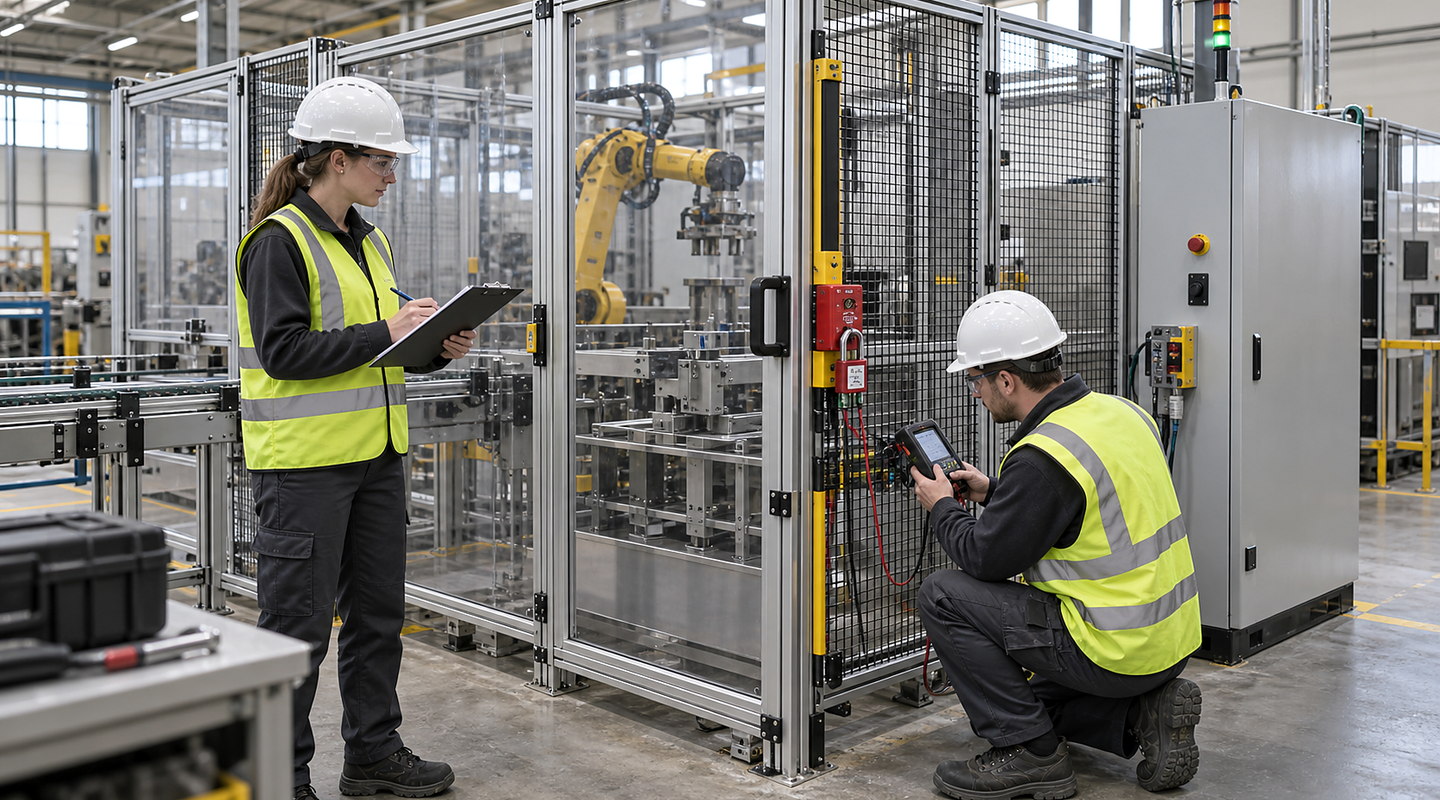
Record identified guards, fixings, panels, hinges and access devices, actual defects and altered tasks, with machine documents, defect controls and competent assessment responsibilities.
Use identifiable machine and guard/access-point references with location and defect photographs. Record mechanical condition, visibility, repeated damage and changes to openings, equipment or operating/cleaning tasks. Link observations to the manufacturer information, available drawings and site machinery assessment, identifying who will assess defects and control machine use.
Follow the assessment-to-maintenance-record sequence and retain the agreed repair and checking evidence. Visual inspection and functional assessment answer different questions. Record uncertainty and arrange competent investigation instead of assuming that a guard present on the machine is adequate.
Plan machine guard maintenance around your machine hazards, operator tasks, access, stopping behaviour and validation evidence. Discuss a site-specific safeguarding concept with Oxford Machine Guarding. Use this guide to resolve hazards and foreseeable access for machine-guard inspection & maintenance before it limits the final system.
Discuss your application
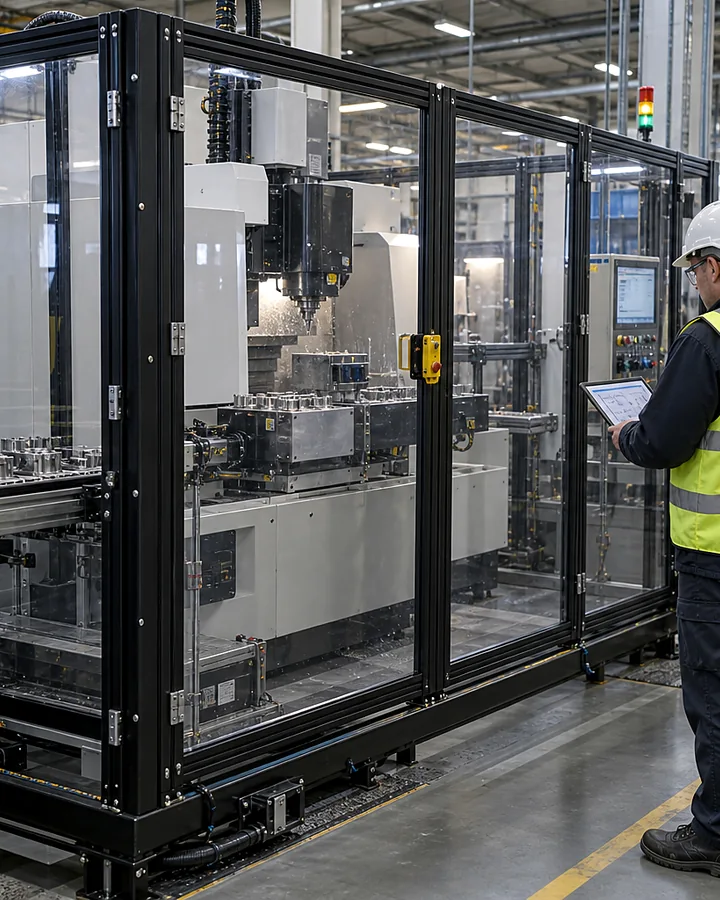
Identify the machine and exact guard/access point with overall and defect photographs. Record fixings, hinges, panels/mesh, alignment, visibility and relevant access devices against available drawings and manufacturer information.
Include normal operation, cleaning, maintenance and foreseeable intervention, recurring contact/vibration or damage, and changes to openings, tasks or nearby equipment. State which machines or protective functions remain outside the reviewed scope.
Connect defects and changed access to the approved protective arrangement, restrictions on machine use and corrective work. Retain replacement specifications, checking responsibilities, results, unresolved items and follow-up actions.
For Hazards and Foreseeable Access for Machine-Guard Inspection & Maintenance: Hazard and access survey, describe the current position, required outcome, acceptable limits and known exceptions for hazards and foreseeable access for machine-guard inspection & maintenance. That lets us compare options against your real production rather than one nominal value.
For Hazards and Foreseeable Access for Machine-Guard Inspection & Maintenance: Hazard and access survey, describe the current position, required outcome, acceptable limits and known exceptions for machine motion and stopping behaviour. That lets us compare options against your real production rather than one nominal value.
For Hazards and Foreseeable Access for Machine-Guard Inspection & Maintenance: Hazard and access survey, describe the current position, required outcome, acceptable limits and known exceptions for operating, cleaning and maintenance tasks. That lets us compare options against your real production rather than one nominal value.
For Hazards and Foreseeable Access for Machine-Guard Inspection & Maintenance: Hazard and access survey, describe the current position, required outcome, acceptable limits and known exceptions for existing control-system architecture. That lets us compare options against your real production rather than one nominal value.
For Hazards and Foreseeable Access for Machine-Guard Inspection & Maintenance: Hazard and access survey, describe the current position, required outcome, acceptable limits and known exceptions for space, visibility and operator ergonomics. That lets us compare options against your real production rather than one nominal value.
For Hazards and Foreseeable Access for Machine-Guard Inspection & Maintenance: Hazard and access survey, describe the current position, required outcome, acceptable limits and known exceptions for risk-reduction and validation evidence. That lets us compare options against your real production rather than one nominal value.