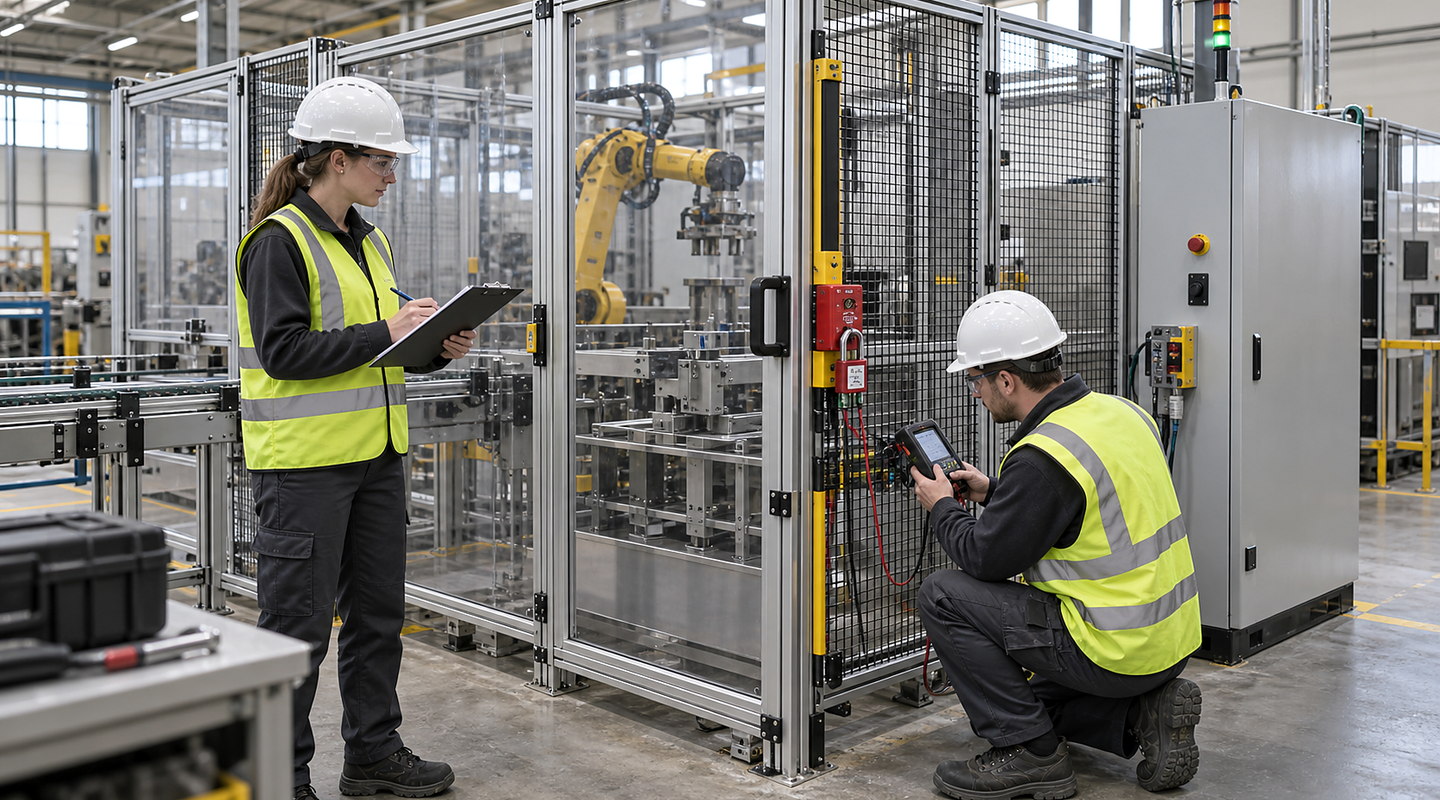
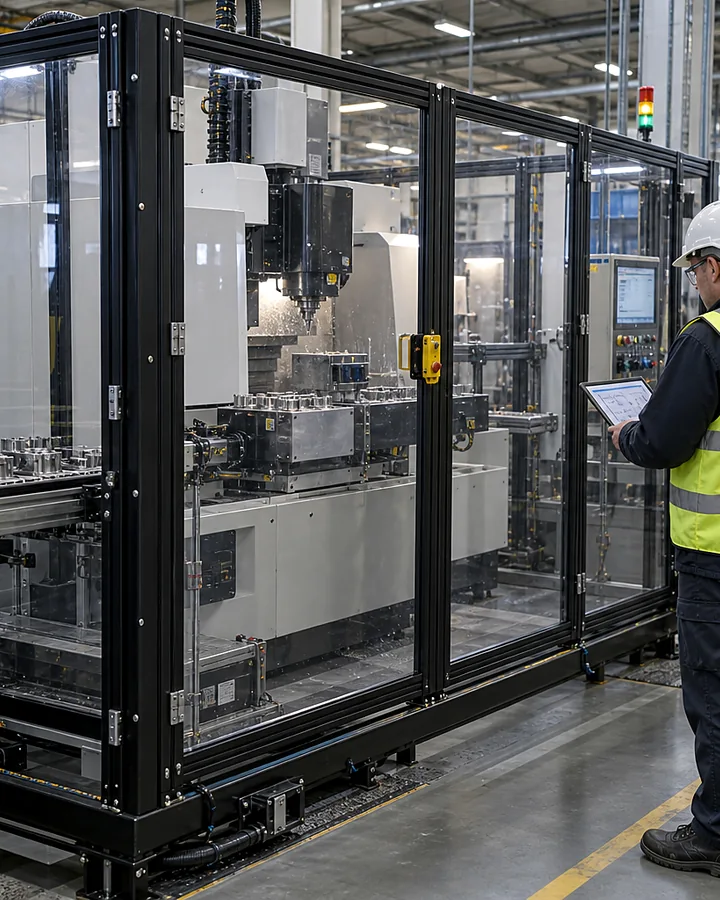
Machine guard maintenance keeps the installed protective arrangement under review as equipment wears and production changes. Record the condition of guards and access devices, then agree corrective work and verification with competent personnel using the machine’s instructions and risk assessment.
Speak directly with Oxford Machine Guarding about machine-guard inspection and maintenance.
Quick answer
What checks and maintenance should our installed machine guards receive?
Build the maintenance record around the installed guards, fixings, hinges, panels and access devices. Include damage, looseness, visibility and changes made for production or cleaning. Define who reports defects and how the machine is controlled until they are resolved, following the manufacturer information and the site’s machinery assessment.
Selection criteria
Turn guard observations into controlled actions
Use these decisions to define the proposed equipment and the checks needed for your application.
Decision 1
Identify each guard and machine
Use a machine reference and identifiable guard or access point. Retain photographs showing the overall location as well as the defect. This avoids a repair instruction referring to the wrong panel, hinge or door on a larger line.
Decision 2
Inspect mechanical condition
Record cracked panels, damaged mesh, loose or missing fixings, distorted frames and doors that no longer align. Include evidence of repeated contact or vibration. The inspection method should reflect the guard’s intended purpose and the manufacturer’s maintenance information.
Decision 3
Review access changes
Note cut-outs, removed sections, moved equipment or new operator tasks. A change that improves material flow may also alter access to a hazard. Treat these as assessment issues rather than simply restoring the visible condition of one panel.
Decision 4
Separate visual and functional checks
A door that closes neatly does not establish that its interlock or associated safety function works correctly. Assign relevant functional testing and validation to competent personnel under the agreed procedure; do not bypass a device to keep production running.
Decision 5
Control defects and repair scope
Define how defects are reported, assessed and acted on, including restrictions on machine use. Specify replacement materials and components against the approved design. An unreviewed substitute may change visibility, strength, alignment or the protective function.
Decision 6
Verify and retain the result
Record the defect, approved work, parts, date and checks before release. Retain unresolved items and the person responsible for follow-up. Set inspection and maintenance intervals from the machine, use and assessment rather than one universal calendar frequency.
Applications
Two useful starting points for machine guard maintenance
The right choice changes with hazards and foreseeable access for machine-guard inspection & maintenance, machine motion and stopping behaviour, your line layout and required results.
Follow the sequence below to resolve the main specification questions before committing to equipment or installation.
01
Establish the baseline
Identify the installed guarding arrangement, available drawings and manufacturer maintenance requirements for each machine.
02
Record condition and changes
Inspect under a suitable safe system of work. Capture damage, wear and alterations with specific locations and photographs.
03
Authorise corrective work
Resolve the protective requirements before selecting replacements. Coordinate isolation, repair and any necessary safety-function assessment.
04
Close the maintenance record
Complete the agreed checks, document remaining restrictions and update the inspection plan using the condition found.
Important limits
Know what needs a separate check
Current standards and required performance levels must be assessed for the complete machine and intended use.
A site survey and task-based risk assessment are required before a safeguard is selected.
Mechanical changes can affect access, visibility, cleaning and machine operation.
Your final solution for machine-guard inspection and maintenance must reflect the law, current standards and site-specific risks that apply to your installation.